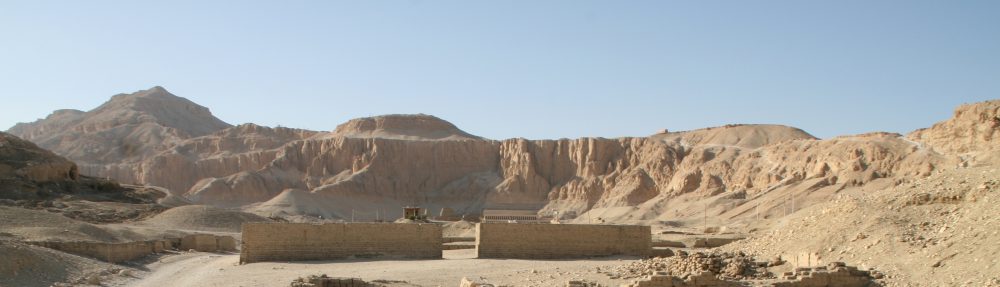
Winter has finally arrived in Germany and being back on the desk and in the classrooms at LMU, it is especially nice to reflect a bit on our 2022 season of the Ankh-Hor project in sunny Luxor. It was an extremely pleasant and productive season, and I am grateful to all team members!
The major goal of the 2022 season was to continue the cleaning, consolidation, and documentation of the large number of objects excavated from TT 414, the monumental tomb of Ankh-Hor, High Steward of the Divine Adoratrice Nitocris (26th Dynasty), by the Austrian mission directed by Manfred Bietak. The focus was on wooden coffins and cartonnage elements from TT 414 and included both Late Period pieces and Ptolemaic ones. Work was conducted from September 27 to October 27, 2021 (with our amazing SCA Inspector, Saad Kenawy Mohamed).
The detailed documentation of objects from TT 414 resulted, thanks to the great efforts of Hassan, Saad and Patrizia, in a total of 147 drawings during the 2022 season, comprising wooden objects, stamped mud bricks (deriving not from TT 414), shabtis and pottery.

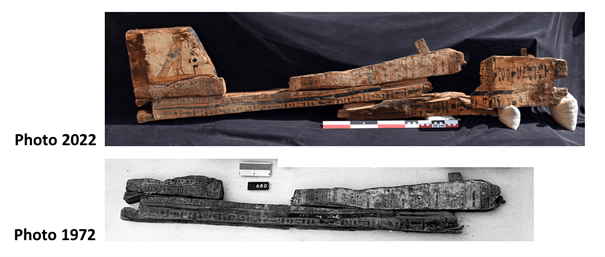
Much progress was also made in assigning previously not identified pieces of painted wooden coffins to specific coffins documented by the Austrian mission in the 1970s. One important example is Reg. 680 for which four new matching pieces were found. However, for this important coffin of the founder of the 30th Dynasty reuse of TT 414, Pa-di-Amun-neb-nesut-tawy I, there are still two missing pieces from the left side of the coffin and its foot part which were documented in the 1970s. Fig. 2 shows the comparison between the status of the right side of the upper part of the coffin in 1972 and in 2022 with three matching fragments. This coffin is thus a good example for the challenges in our work – there are still missing pieces for important coffins and the identification of all fragments is not yet fully accomplished.
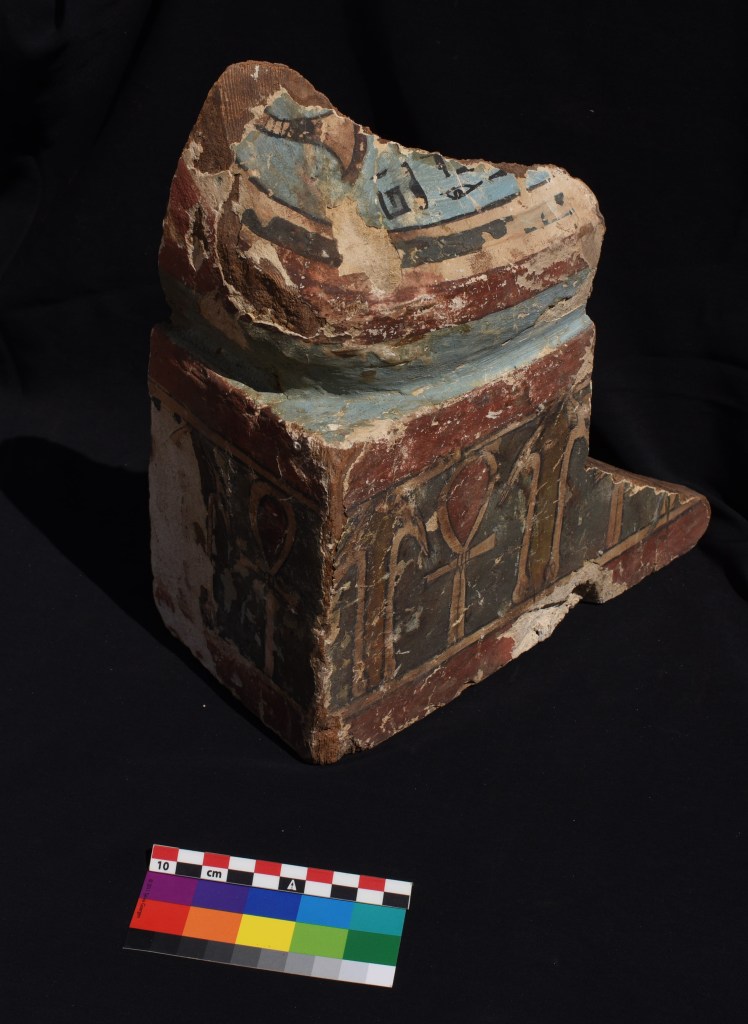
Many painted wooden coffin fragments were cleaned and consolidated in the 2022 season by our conservators Antje Zygalski and Noura Mustafa El-Taher. Noura did an amazing job in reconstructing free standing elements of coffins in the shape of djed-pillars and Isis-symbols.


The best example that we were able to identify new owners of coffins during the 2022 is Reg. No. 689, found in the debris in the burial chamber of Ankh-Hor. The lady Takerheb is now confirmed as the owner of this piece.
During the 2022 season, also some new names of persons buried in TT 414 were identified. For the 26th Dynasty, a possible new female relative of Ankh-Hor was recorded. The fragment of a new anthropoid coffin, K07/243, gives the name Ta-dj-Iset (a common name in the 25th and 26th Dynasties), previously unknown from TT 414. Since there are several Pa-di-Iset attested in Ankh-Hor family, this new female might extend the family tree – for more information, I will need to identify matching pieces to this newly recorded coffin fragment.
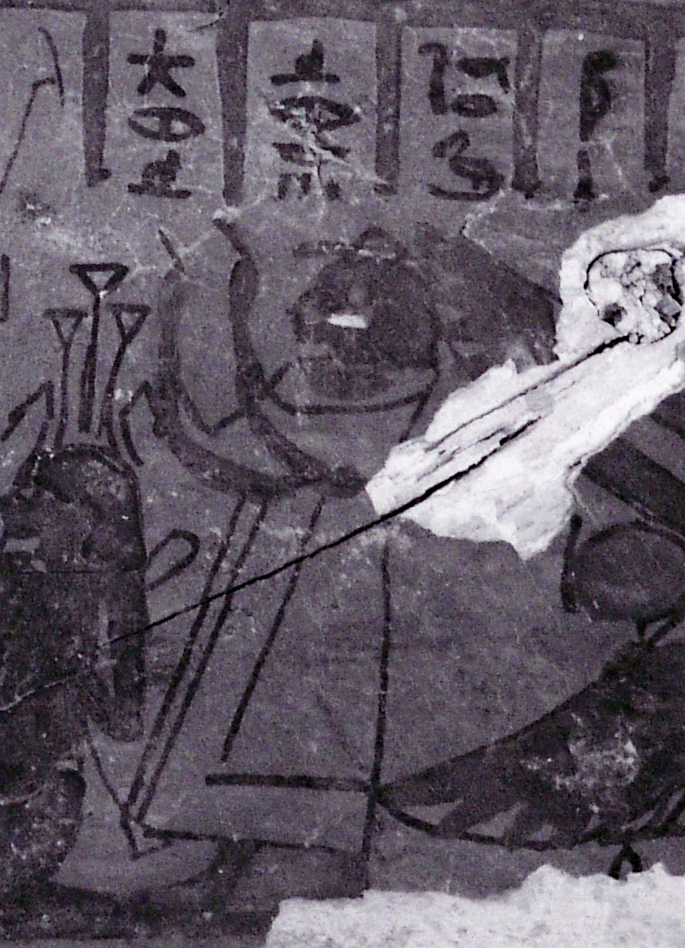
In addition to the stylistic assessment of the cartonnages from TT 414, much progress was done this season in identifying the owners of these trappings. Thanks to infrared photography, some names and titles became readable and allow to attribute cartonnage elements to Ptolemaic individuals already known from other objects, for example a new cartonnage element is attested for G 148, Ta-sherit-Khonsw, with K08/85.
One particular important identification of a new cartonnage element is the one for Twt, an individual otherwise only attested by his outer anthropoid coffin in yellow-red on black-style (Reg. No. 510). This also offers us the possibility to compare the motifs and styles on coffins and cartonnages.
New coffins were also assigned to known persons buried in TT 414. As one example, the inner anthropoid coffin fragment of Imhotep (G 16) was identified with Reg. No. 19/04 and is now a new addition to his set of coffins with an outer coffin in black-yellow style, Reg. No. 759.
To conclude, several new observations on the material from TT 414 are possible as direct results of the 2022 season, in particular in three main thematic fields, first of all because of the extended application of infrared photography: 1) genealogical information and new coffin owners, 2) additions to existing tomb groups as well as 3) a better understanding of the coffin design and the main motifs, also in relation to cartonnage elements.
Despite of all this progress, large amounts of fragments of coffins and cartonnage from the Late Period to Ptolemaic and also Roman times remain to be cleaned, are partly in need of reconstruction and of full documentation. Our work therefore needs to be continued in the next season. Our 2022 results hopefully show that these efforts are immensely worthwhile.


 The Ankh-Hor Project