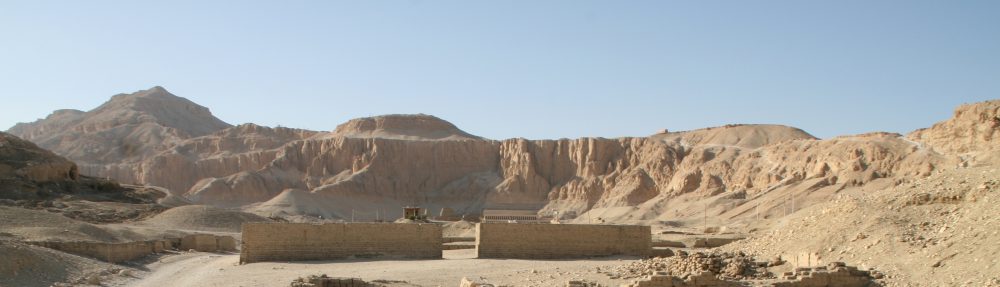
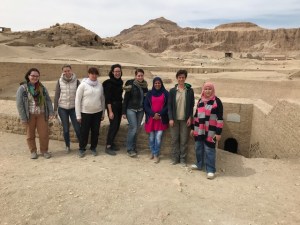
A very busy and successful week just came to an end – more team members have left today, and we will finish off the 2021 season in a small group with one more week to go!
We started into the week with a very pleasant and productive visit by my dear friend and colleague Salima Ikram. We have been working together on some embalming deposits this season for the South Asasif Conservation Project. Salima kindly passed by to have a look at the black goo – bitumen and resin – in the interiors of our coffins from TT 414. One lower part of an anthropoid Ptolemaic coffin was particularly interesting.
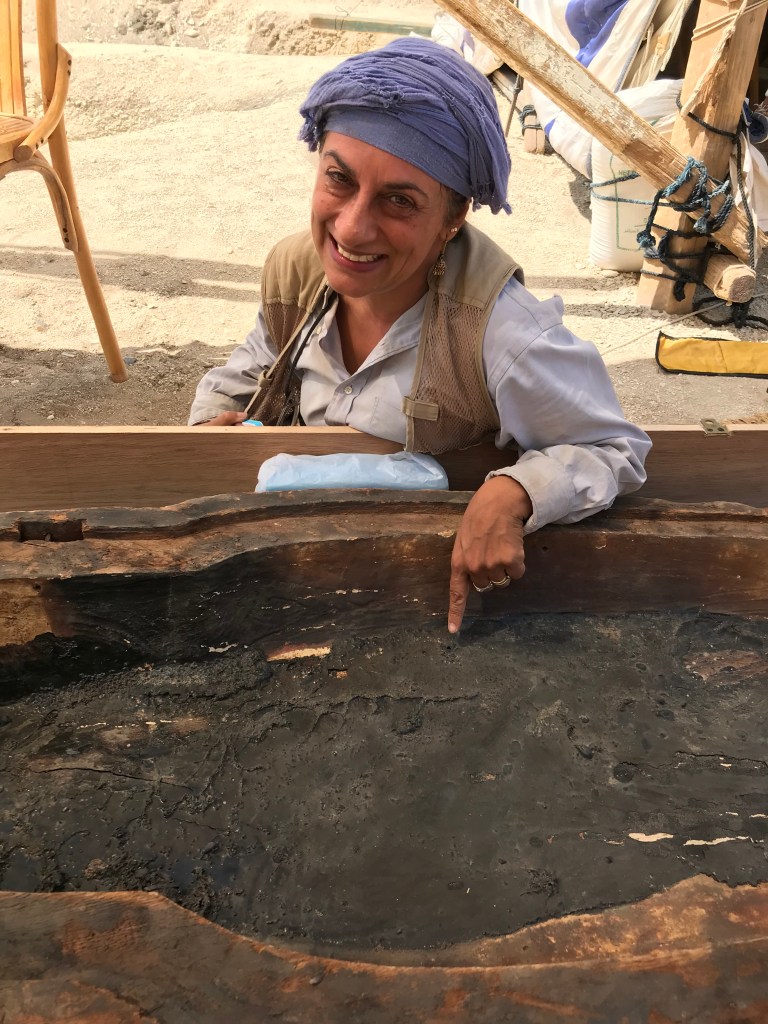
A number of beetles were stuck into the resin/bitumen – did they enter the coffin together with the mummy? According to Salima, these are darkling beetles, Pimelia nilotica in Egypt. Since these feed on animal (and human) tissue, it is indeed likely that they entered the coffin when the mummy was put there, presumably before the funerary ceremony when the pouring of the black goo took place. However, many questions are still open, and we cannot exclude a reuse of this coffin and a more complex story behind the “coffin beetles”. This is even more true since we documented smaller fragments of lower bases of coffins with similar findings – less well preserved, but also with clear remains of beetles stuck to the resin in the coffin.
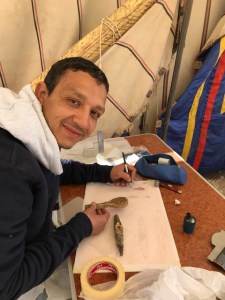
The focus of this week was preparing the coffins and other objects which we will transport to the study magazine of the Egyptian authorities next week. Here, one particular challenging piece is the once beautiful 26th Dynasty coffin of Psammetik-men-em-Waset, Reg. No. 591. He bears the same name like one of the brothers of Ankh-Hor, but belongs to the family of Nes-Menw which is closely related to the family of Ankh-Hor. Maybe the owner of our coffin was the grand-nephew of Ankh-Hor, making his coffin set of an inner anthropoid coffin and a qrsw-coffin extremely relevant for understanding late 26th Dynasty tomb groups. The piece we are currently working on is an anthropoid wooden coffin with a layer of linen which was painted in white and decorated with texts in blue and green. Unfortunately, the linen was almost completely detached from the wood and the painted layer has suffered much in the last decades in the provisional storage place.

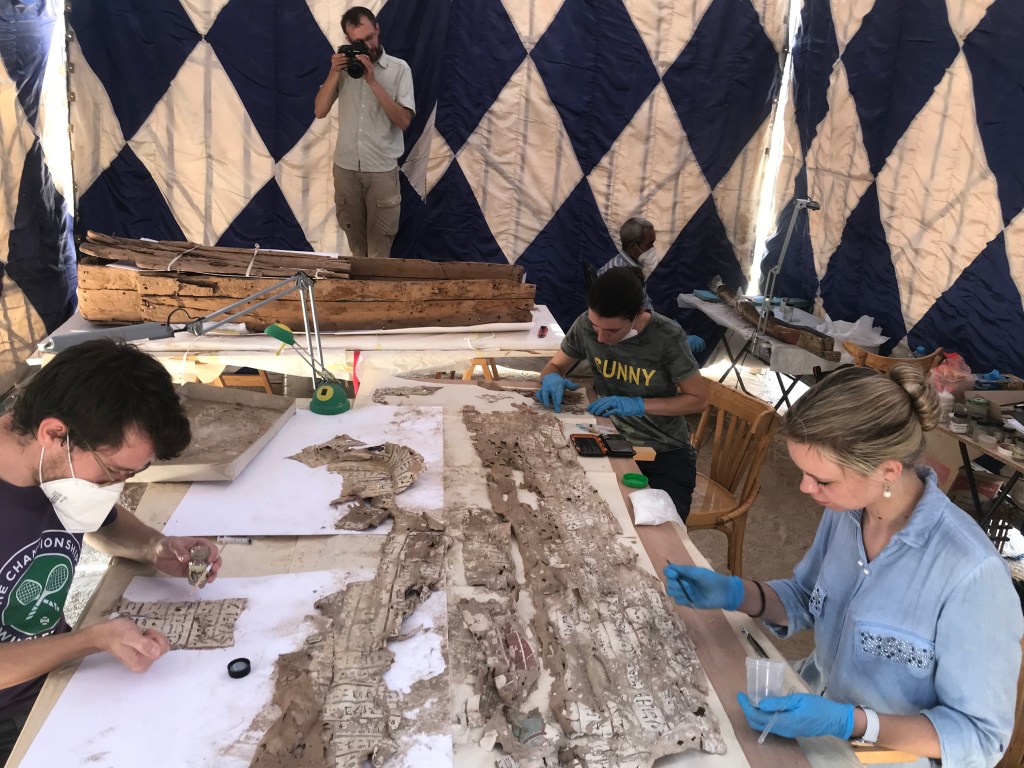
However, this week was also occupied with documentation work of coffins which were not found in TT 414 and are dating to other periods than the 26th Dynasty to Ptolemaic times. One of them was a poorly preserved 25th Dynasty wooden coffin of an anonymous Kushite lady found in Tomb VII – one of the most important findings within the Austrian concession with intact burials of Kushites (for details see one of my earlier articles). The coffin fully consolidated this season was found in burial chamber 3 together with three infant coffins and one painted and inscribed coffin of a Kushite male with the name Irw.

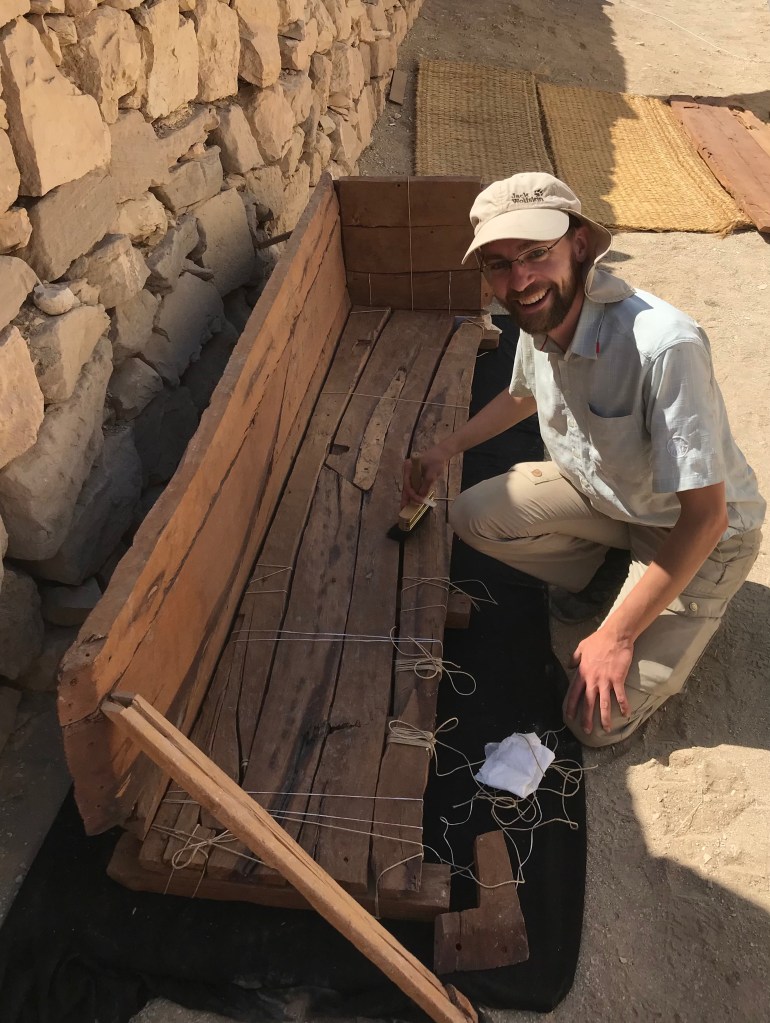
Another important find from the Austrian mission was made in 1971 in one of the Middle Kingdom shaft tombs in the bed of the causeway of Thutmose III. It is a complete, undecorated Middle Kingdom rectangular coffin which was a big challenge to photograph. Cajetan managed to put the piece together and assembled the coffin box with the help of some external supports for photography.

Last, but not least, several new joints to Ptolemaic coffins from TT 414 were made this week based on new infrared photography. One of my favourite pieces belongs to a woman with the name of Mutirdis – we knew already some fragments of her lid and side boards, but I managed to identify three additional pieces from the pedestal and foot part. Like it is the case for several other Ptolemaic pieces, reconstructing this beautifully decorated coffin will clearly take another season but is full of potential!

For now, I am very happy and thankful to all the team and looking forward to our last week which will focus on consolidation work and reorganising the space within the provisional magazine.
 The Ankh-Hor Project